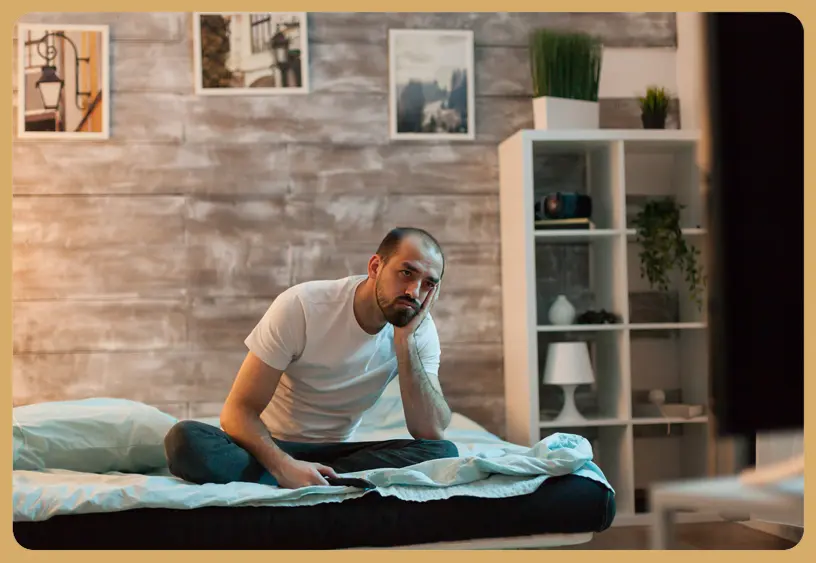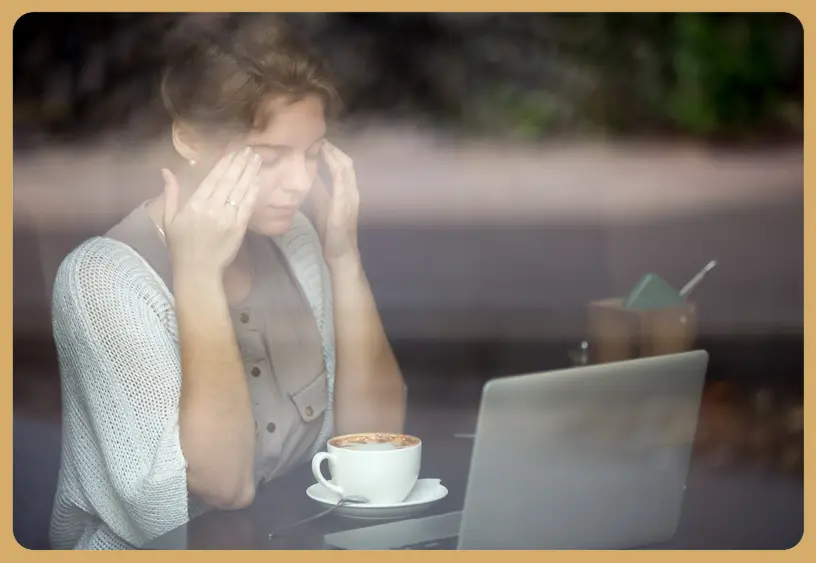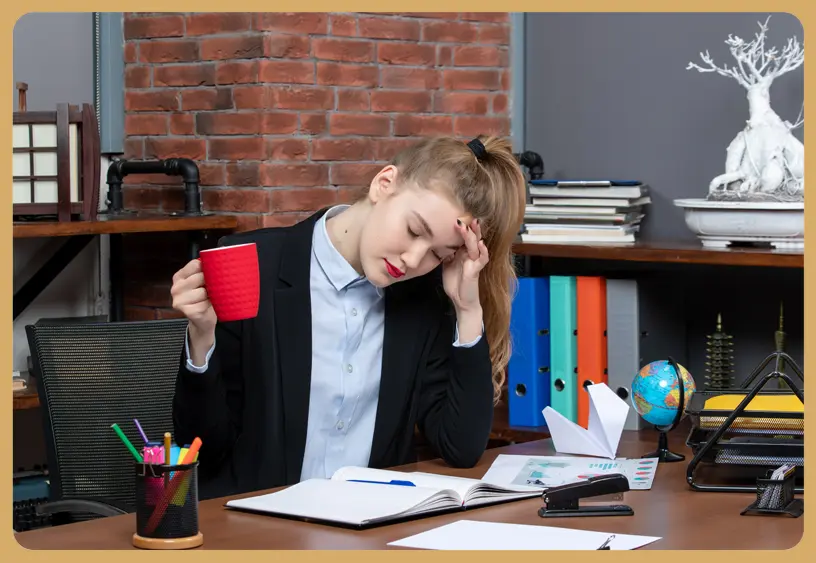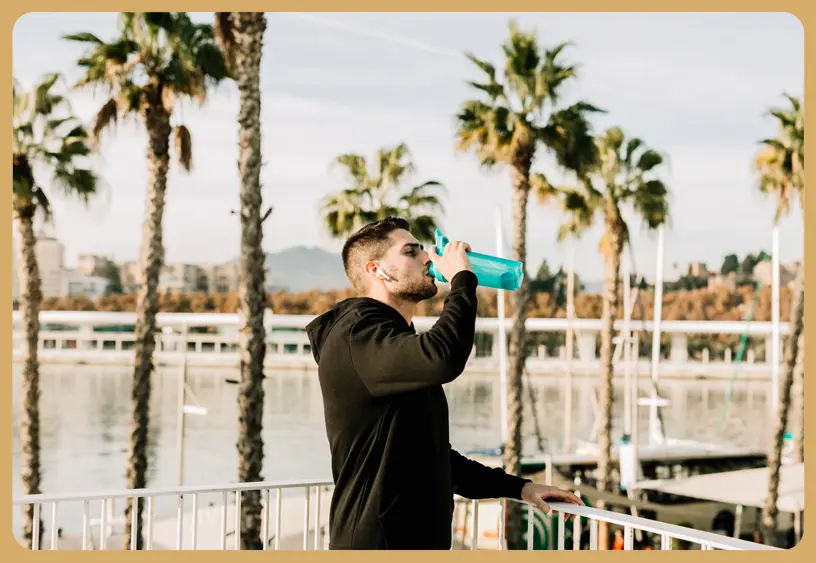
The person who comes in flattened by August has usually decided it isn't a real problem. Everyone lives here. Everyone manages. She's been telling herself for three summers that the exhaustion is a character issue and not a physiological one. So when someone finally says it's the heat, the relief is immediate. It's environmental. It's temporary. September is coming.
Then we go through the actual week and the numbers don't add up the way she expected. Three litres of water a day, tracked. The air conditioning set to nineteen. Barely a minute spent outdoors between the car park and the lift. And still: flat by three in the afternoon, wide awake at two in the morning, irritable in a way that isn't like her. And the question on her face is always the same. I'm doing everything right, so why does this happen every single year?
This blog is for people who have already tried drinking more water and found it didn't fix anything, and for anyone who quietly dreads June. What the heat does to a body is genuinely broader than dehydration, and once you see the whole of it, the summer starts to look like something you can plan for rather than something you survive.
What the Heat Is Actually Doing to You
The word is misleading and always has been. Framing a Gulf summer as a hydration problem is precisely why the water isn't solving it.
Your body spends these months running a continuous cooling operation. Blood is redirected towards the skin, which is part of why standing up quickly feels different in July. Sweat rates in this climate can reach a litre or more an hour during any real exertion, and what leaves in that sweat isn't only water; sodium goes with it.
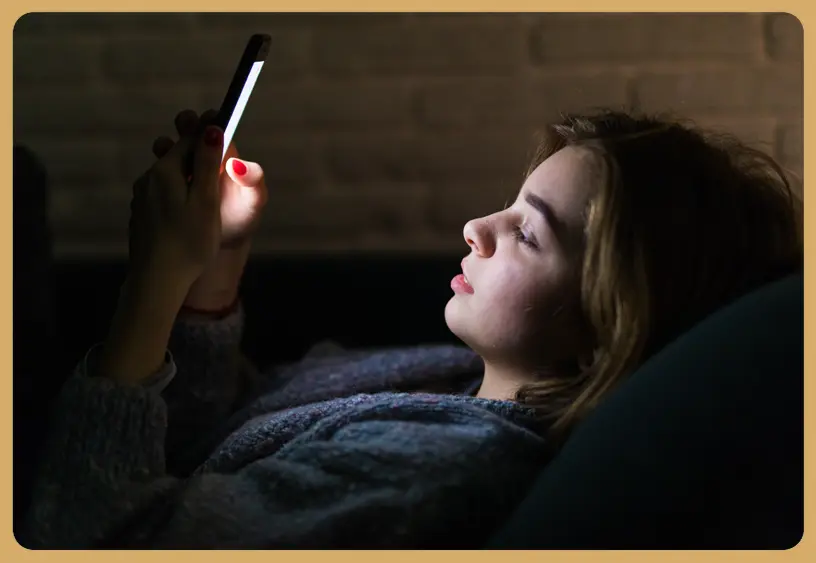
Sleep is the second front, and the one people underestimate. Falling asleep depends on your core temperature dropping, and that drop depends on being able to shed heat. Warm nights interfere with it directly: large studies show higher night-time temperatures delay sleep onset and shorten sleep, with the effects strongest in summer and in hot climates. You aren't imagining the two a.m. wakefulness.
The third front is behavioural and almost invisible. For four months you stop going outside. Daylight exposure collapses, movement collapses, and so does casual social contact.
So you drink more water. That sounds like the answer. It usually isn't the answer it looks like.
Why "Drink More Water" Doesn't Tell You What You Think It Does
Two things get missed.
The first is salt. If you're sweating heavily and replacing it with plain water alone, you're replacing volume without replacing what left with it. Most people never run into trouble here, but the assumption that more water is always better is wrong, and in people who drink very large volumes while sweating hard it can dilute blood sodium in ways that make you feel considerably worse, not better.
The second is that the damage starts far earlier than you'd think. In controlled studies, dehydration of only about 1.4 percent of body mass, which is not enough to make you especially thirsty, produced measurable fatigue, higher tension and anxiety, reduced concentration and more headaches. The mood effects were more pronounced in women. This is the point everyone misses about mild dehydration: it doesn't announce itself as thirst. It announces itself as a bad afternoon.
The number that matters isn't how many litres you drank. It's whether you replaced what you actually lost, salt included.
The Thing That Quietly Drives Every Recommendation We Make
Mood, and the fact that almost nobody connects it to the weather.
Consider what four months indoors does. Your daylight exposure drops to whatever the office ceiling provides, which is a fraction of outdoor light and not enough to anchor a body clock properly. Your movement drops, because walking anywhere between June and September is unpleasant. Your social life narrows to the same handful of air-conditioned rooms. Sleep is worse because the nights are warm. And underneath all of it, a low-grade fluid deficit is nudging your fatigue and anxiety upward.
That combination produces exactly what people describe to us in August: flat, unmotivated, short-tempered, foggy, and privately convinced it's a personal failing. Seasonal mood change is usually discussed as a winter phenomenon in cold countries. Here the season that keeps everyone indoors is summer, and the effect is the same shape.
When patients ask why a mental wellness clinic is talking about salt and air conditioning, this is the answer. The summer doesn't need to be endured. It needs to be planned for.
Where the Details Actually Change the Outcome
There's no protocol. There are a few things that reliably move it.
- Drink steadily and salt your food. Thirst lags behind need, so sipping through the day beats catching up at night. If you've sweated properly, from a workout or from time outdoors, replace electrolytes rather than water alone. Pale straw urine is a crude but useful gauge, and better than a litre target you either hit or feel guilty about.
- Fix the bedroom before you fix anything else. Around twenty degrees works better than the seventeen most people set out of spite at the weather, because very cold dry air brings its own problems and doesn't help you sleep more deeply. A shower before bed helps the core temperature drop that sleep depends on. Blackout curtains matter here for the heat as much as the light.
- Protect your daylight. Ten or fifteen minutes outside early, before seven, is enough to anchor the body clock and costs you nothing in heat exposure. It is the single most valuable thing removed by an indoor summer.
- Move the movement rather than abandoning it. Indoors, or at the edges of the day. Four months of near-total inactivity has consequences that arrive in October.
- Respect the midday window. The national rule bans outdoor work in direct sun from 12:30 to 3:00 between 15 June and 15 September, and it exists because those hours are genuinely dangerous. It's a good default for everyone, not only for people on site.
- Know the difference between heat exhaustion and heat stroke. Heavy sweating, cramps, dizziness, nausea and headache mean stop, get cool, get fluids. Confusion, hot skin with sweating that has stopped, or collapse is a medical emergency: call 998.
Why We Usually Ask You to Plan a Smaller Summer
If we suggest deliberately doing less between June and September, this isn't defeatism. It's what the season actually requires.
People here try to run an unchanged year through July, and then read the resulting crash as evidence that something is wrong with them. In cold countries nobody expects January to look like May. Here the equivalent season is summer, and the same logic applies: fewer commitments, earlier nights, rescheduled exercise, lower expectations of your own output for a defined stretch. Planning a smaller summer is what makes it survivable. Refusing to is what makes August feel like a personal failure.
What a Realistic Summer Day Actually Looks Like
Water with breakfast, and food you've actually salted. Ten minutes outside at half past six, before the heat arrives, for the light rather than the exercise. Fluids through the morning rather than a litre at once. Nothing outdoors in the middle of the day. Movement indoors, or after dark. Electrolytes after anything that made you sweat. Dinner at a reasonable hour instead of eleven. Bedroom around twenty, a shower before bed, curtains drawn since morning.
One outdoor thing and one social thing, most days, even small ones, because those are the two that quietly disappear.
That is a good day. It won't feel impressive, but by how this season actually works, an unremarkable routine held through four months beats a heroic one abandoned in week two.
Judge it across the season rather than day to day, and remember that September is not the finish line here; the humidity often peaks after the temperature does. If the flatness is still there in November, when the weather has turned and the city has come back outside, that's genuinely useful information, because it means the heat wasn't the whole story and something else deserves attention.
Conclusion
A Gulf summer isn't only a hydration challenge. It's a sustained physiological load with a sleep problem and a mood problem folded into it, and it lasts a third of the year. The body does more, not less, than people credit it with during these months, and the work is in reducing what you're asking of it rather than pushing through. Salt as well as water, a bedroom you can actually sleep in, and the decision to plan a smaller season aren't minor details. They separate a summer you get through from one that quietly takes something out of you.
Stop treating August as a test of character. Book a consultation at Zivanza Wellness and work out what the season is actually doing to your sleep, your energy and your mood. Book Now
- Share