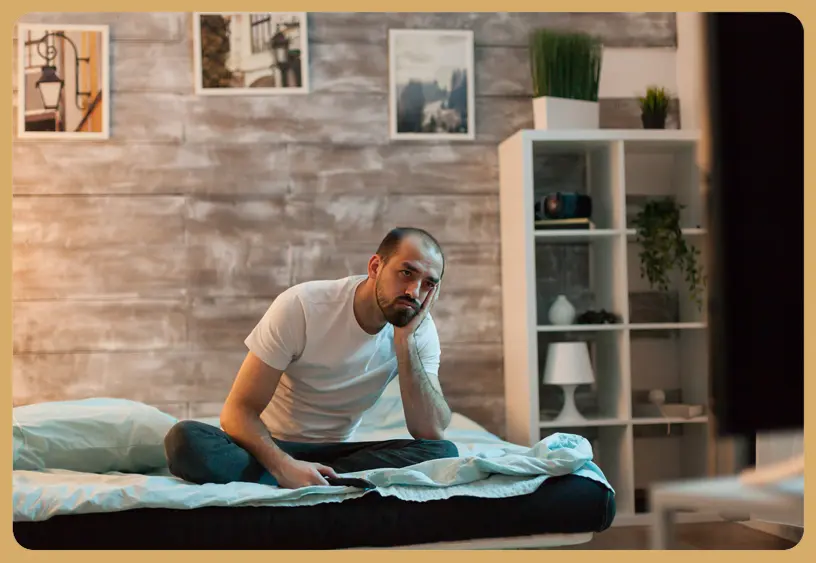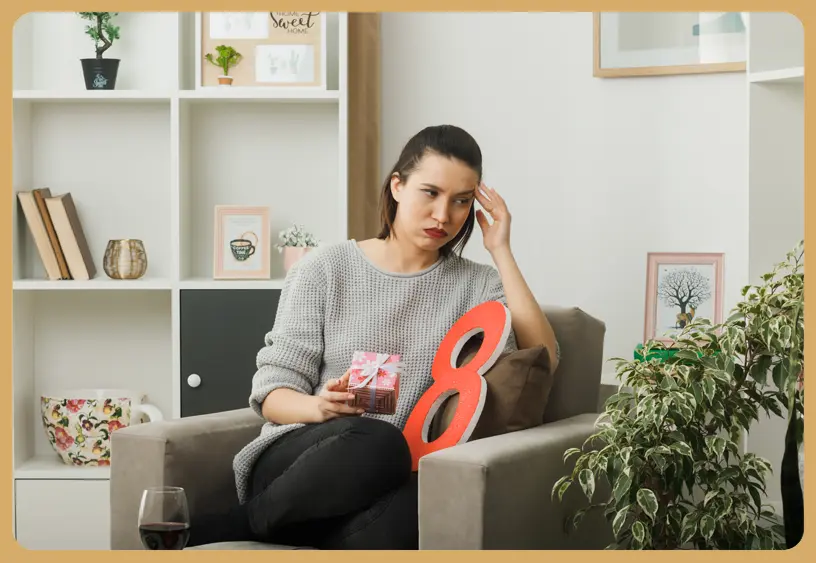
The person who comes in about stress has usually already braced herself to be told she lacks willpower. She's heard it from herself for years. So when someone finally explains that this is emotional eating, that it's about stress rather than food, the relief is immediate. It's a feelings problem. She's good at working on feelings. This is going to be solvable.
Then three months pass and it doesn't resolve the way she expected. A journal. A meditation app she's actually used. A clear understanding of which parts of her job are doing this to her. And still, at twenty to ten on a Tuesday, she's standing at an open fridge with no memory of deciding to walk there. And the question on her face is always the same. If I know exactly why I'm doing this, why can't I stop?
This blog is for people who understand their pattern perfectly and can't interrupt it, and for anyone who suspects the evening is undoing what the daytime worked hard at. The mechanism is more physical than the word "emotional" suggests, and once you see what's driving it, the advice that never worked looks like the wrong advice rather than proof of a character flaw.
What's Actually Happening at the Fridge
The word is misleading and always has been. "Emotional eating" implies something irrational sitting on top of a feeling, a lapse in control. It's close to the opposite. It's a highly effective piece of physiology doing exactly what it evolved to do.
Acute stress usually suppresses appetite. The sudden email, the near-miss on Sheikh Zayed Road, the difficult phone call: most people don't want lunch afterwards. Chronic stress behaves differently. Sustained cortisol raises appetite and shifts what you want towards energy-dense food, the sweet and the fatty in particular.
The important part is what happens next. In the research that gave us the phrase, eating those foods measurably dampened the stress response itself. Comfort food is not a figure of speech. It comforts. The system learns that fast, which is why the route from a bad afternoon to an open fridge gets shorter every time you take it.
So it works. That sounds like a failure of discipline. It usually isn't the failure it looks like.
Why "Emotional" Doesn't Tell You What You Think It Does
Here's what gets missed. A large share of what people call emotional eating isn't driven by emotion at all. It's driven by deficit, and the two feel identical from the inside.
Sleep is the clearest case. In a controlled study, two nights restricted to four hours produced:
- a twenty-eight percent rise in ghrelin, which signals hunger,
- an eighteen percent fall in leptin, which signals fullness,
- and a twenty-four percent rise in reported hunger.
The increase wasn't spread evenly either. It concentrated on calorie-dense, carbohydrate-heavy food. That isn't a mood. It's a hormone gradient, and no amount of insight talks you out of it.
The second deficit is the day itself. Coffee for breakfast, lunch eaten in eleven minutes over a keyboard or skipped, nothing between two and eight. By evening there's a real physiological debt, and it comes due at the hour when your capacity for deliberate decisions is lowest. Dietary restraint is one of the most consistently identified maintainers of binge eating, which is why structured treatment starts by making eating more regular rather than more controlled.
The nine o'clock craving isn't always a feeling. Often it's an unpaid bill from earlier in the day.
The Thing That Quietly Drives Every Recommendation We Make
The loop, and specifically the part of it that comes after the eating.
It runs like this:
- You eat more than you meant to.
- Shame arrives, with a resolution to be stricter tomorrow.
- Tomorrow you eat less, later and more anxiously.
- By evening the deficit and the tension are both bigger than the night before, and the urge that arrives is stronger than the one you just failed to resist.
Then it repeats, and each cycle reads as more evidence that something is wrong with you.
What keeps this going isn't the trigger. It's the response. The stricter the reaction, the more reliably the next episode arrives.
It's also worth naming where this crosses a clinical line. Recurrent episodes involving a real sense of loss of control, followed by significant distress, often eaten alone because of embarrassment, describe binge eating disorder, which is the most common eating disorder there is and responds well to proper treatment. That isn't a heavier version of a willpower problem. It's a different thing, and it has an evidence base behind it.
When patients ask why we're not giving them a meal plan, this is the answer. The urge doesn't need to be resisted harder. It needs to be made less necessary.
Where the Details Actually Change the Outcome
This is the part that never makes it into the advice. There's no trick, just a few things that reliably move it.
- Eat regularly, on a schedule rather than on hunger. Meals and a planned snack at roughly consistent times, whether or not the day has left you feeling like it. This is the first move in the best-supported treatments for binge eating, and it is deliberately not about eating less. It removes the deficit the evening was compensating for.
- Chase sleep before chasing willpower. If the week has been short on sleep, the craving you're fighting is partly hormonal, and fixing bedtime will do more than any amount of resolve.
- Name the feeling before you open the door. Labelling an emotion tends to reduce its intensity, and it answers the useful question: is this stress, boredom, loneliness, or simply not having eaten since two? Different answers point to different responses.
- Then let the urge run rather than fighting it. Cravings rise, peak and fall, usually within twenty minutes. Sitting with one without acting, on the understanding that it will pass on its own, teaches your system something that resisting it grimly never does.
- Change the friction rather than banning the food. Prohibition raises a food's salience. Keeping it out of the evening line of sight, or in a form that takes a minute to prepare, works better than a rule you'll break and then punish yourself for.
Why We Usually Ask You to Stop Trying to Eat Less
If we suggest eating more reliably rather than more carefully, this sounds like the wrong instruction. It's the one the evidence supports.
Restriction is the accelerant here, not the extinguisher. Every tightening produces a bigger rebound, and the rebound gets blamed on weakness rather than on the tightening. Taking the restriction out first is what makes the pattern visible, because once you're eating regularly, the episodes that remain are the genuinely emotional ones, and those are the ones worth working on.
What a Realistic Week Actually Looks Like
- Breakfast that isn't only coffee.
- Lunch away from the screen.
- Something at four, planned, because that's when the day sags.
- Dinner at a sane hour rather than at eleven, after a delivery order placed in a state you wouldn't describe as hungry.
The evening urge still shows up, but on Tuesday and Thursday rather than every night. On Tuesday you notice it's the meeting, not hunger, and it passes in fifteen minutes. On Thursday you eat the biscuits anyway. And then on Friday you eat normally instead of atoning, which is the part that actually breaks the loop.
That is a good week. It won't feel like one if you were expecting the urges to disappear, but by how this pattern actually resolves, a week with two episodes and no punishment beats a week with one episode and three days of restriction afterwards.
The six to eight weeks after you change the daytime is where the evenings change, not the first three days. Track sleep, meal timing and what preceded each episode rather than weight, because weight is the least informative number available here and watching it tends to feed the loop. And if the episodes involve real loss of control, secrecy or serious distress, treat that as a reason to speak to someone rather than a reason to try harder alone.
Conclusion
Stress eating isn't a character defect and it isn't a mystery. It's a physiological solution applied to a problem food can't fix. The body does more, not less, than people credit it with here, and the work is in removing what makes the urge inevitable rather than out-arguing it at the fridge door. Regular meals, sleep and the choice not to compensate the next day aren't minor details. They separate a pattern that fades from one that quietly worsens.
Stop treating this as something you should have handled by now. Book a consultation at Zivanza Wellness and work on it with someone who understands what's actually driving it. Book Now
- Share